
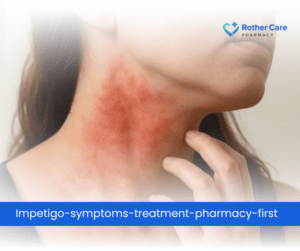
Waking up to find strange, crusty sores on your child’s face or even your own face can be frightening. In the UK, impetigo is a common thing in schools and nurseries, often causing a bit of a panic among parents. While it looks unpleasant, it is usually a mild condition that clears up quickly with the right care.
At Rother Care Pharmacy, we believe that understanding the “what” and “how” of a skin infection is the best way to manage it. This article will walk you through everything you need to know about impetigo, from spotting the first sign to accessing Pharmacy First services for fast, local treatment.
What is Impetigo?
Impetigo is a highly contagious bacterial skin infection. It can affect anyone, but it is most frequently seen in children aged two to five. It usually starts when bacteria, typically Staphylococcus aureus or Streptococcus pyogenes, infect the skin through a small cut, insect bite, or even an area of eczema.
Because it is so “catchy,” it tends to spread rapidly in environments where people are in close contact, such as schools, gyms, or even your own house.
The Two Main Types of Impetigo
Not all impetigo looks the same. Depending on the bacteria involved, it generally falls into one of two categories.
- Non-bullous Impetigo: This is the most common form. It typically starts as small red sores around the nose or mouth. These sores quickly burst, leaving behind the classic, “honey-coloured” crust that people often associate with the infection.
- Bullous Impetigo: This version is more common in babies and young children. Instead of small sores, it causes larger, fluid-filled blisters (bullae) that appear on the trunk, arms, or legs. These blisters are usually painless but can stay on the skin longer before bursting.
Identifying Impetigo Symptoms
Spotting impetigo symptoms early can help prevent the infection from spreading to other parts of the body or to other people.
Common Signs in Children and Adults
impetigo symptoms and treatment
- Red Sores: Usually appearing first around the nose, mouth, or limbs.
- The Golden Crust: After the sores burst, they develop a distinct, yellowish crust.
- Itching and Soreness: The affected area might be itchy or slightly painful, but it doesn’t usually cause a fever or make the person feel “ill.”
- Fluid-filled Blisters: In cases of bullous impetigo, clear blisters may appear and expand before breaking.
It is important to remind children not to scratch the sores. Scratching can move the bacteria under the fingernails, leading to new clusters of infection elsewhere on the skin.
Is Impetigo Contagious?
The short answer is yes, extremely.
The bacteria thrive in warm, moist environments. You can catch impetigo by making direct skin-to-skin contact with someone who has an active sore. However, you can also catch it indirectly. The bacteria can survive for a short time on “fomites, things like towels, bedsheets, toys, or even door handles.
How it Spreads
- Skin-to-Skin: Hugging, playing, or contact sports.
- Shared Items: Using the same towel or flannel as an infected person.
- Self-Infection: Touching a sore and then touching a different part of your own body.
Effective Impetigo Treatment Options
The goal of impetigo treatment is to clear the infection quickly and reduce the risk of it spreading to others. In the past, you might have spent hours on hold with your GP surgery to get a prescription. Now, things are much simpler.
How Pharmacists Can Help
Under the Pharmacy First services at our pharmacy, you can walk in and speak with our pharmacist directly. We are trained to assess skin conditions like impetigo. If appropriate, we can provide
- Antiseptic Creams: For very minor, localised patches.
- Antibiotic Creams: These are the most common treatment and are applied directly to the sores to kill the bacteria.
- Oral Antibiotics: If the infection is widespread or bullous, our pharmacist may recommend a course of antibiotic liquid or tablets.
By using Pharmacy First services, you get the treatment you need without the wait, helping your child get back to school sooner.
Prevention: Keeping the Infection at Bay
Until the sores have scabbed over or you have been on antibiotics for 48 hours, you are still contagious. Here is how to keep the rest of the Stratford community safe:
- Stay Home: Keep children away from school or nursery until they are no longer contagious (usually 48 hours after starting treatment or once the sores have dried up).
- Hands Off: Discourage scratching or touching the sores.
- Hygiene First: Wash hands regularly with soap and water.
- Separate Linens: Do not share towels, flannels, or bedsheets with anyone who has the infection. Wash these items at a high temperature (60°C).
- Cut Nails Short: This reduces the amount of bacteria that can hide under the nails and lessens the damage from scratching.
Frequently Asked Questions (FAQ)
How long does it take for impetigo to clear up?
With antibiotic treatment, the sores usually start to heal within a few days and are often completely gone within a week.
Can adults get impetigo?
Yes. While it is more common in children, adults can catch it, especially if they have a break in the skin from shaving, an insect bite, or a chronic skin condition like eczema.
Does impetigo leave scars?
Usually, no. Because the infection stays on the surface of the skin, the sores generally heal without leaving a permanent mark, provided they aren’t scratched excessively.
Is it a “bug”?
It is caused by bacteria, not a virus (like the cold or flu). This is why antibiotics are an effective treatment, whereas they wouldn’t work for a viral rash.
When to Seek Help Immediately
While impetigo is usually straightforward, you should seek medical advice if
- The infection is spreading rapidly despite treatment.
- You or your child develops a high temperature or feels generally unwell.
- The sores become very painful or start to leak pus.
Your Local Health Partner in Stratford-upon-Avon
Dealing with a skin infection can be stressful, but you don’t have to navigate it alone. Whether you need a diagnosis, treatment, or just some reassurance, we are here to listen.
If you suspect you or your child has impetigo, skip the GP queue and visit us. We can provide expert local pharmacy advice and help you access Pharmacy First Services at our pharmacy today.
Speak to your local pharmacist at Rother Care Pharmacy or learn more about Pharmacy First services to get the right care, right now.
Medical Disclaimer: This content is for informational purposes only and does not constitute medical advice. Always speak with a qualified healthcare professional, such as a pharmacist or GP, for a formal diagnosis and treatment plan tailored to your specific needs.